
High-Precision Zinc CNC Machining Services
Leveraging advanced 5-axis simultaneous machining and mill-turn technology, we deliver high-accuracy zinc alloy components with superior surface finishes. Our precision zinc machining solutions are the ideal fast-turnaround alternative to die casting for the medical, automotive, and electronics industries.
Why Choose Our Zinc CNC Machining Services?
Dimensional Stability
Zinc alloys feature exceptional casting and machining properties that allow for thinner walls and tighter tolerances than most other metals. This ensures high-precision components that maintain their shape and integrity even in complex, high-stress applications.
Single Setup Machining
Thanks to advanced turn-mill technology, we can complete complex rotational parts and milled features in a single setup. This process completely eliminates positional errors caused by secondary setups, ensuring maximum accuracy for your zinc alloy parts.
DFM Expert Support
It's not just automated software review. Our engineers will personally inspect your drawings and provide optimization suggestions regarding wall thickness, internal corner radii, and tool paths to ensure your zinc designs are cost-effective and production-ready.
What is Zinc alloy?
A zinc alloy is a versatile metal material composed primarily of zinc, combined with elements like aluminum, magnesium, and copper to enhance its mechanical properties. Renowned for its low melting point and excellent fluidity, it is a premier choice for high-precision manufacturing.
Zinc alloys, particularly the Zamak series, offer a unique balance of high impact strength, superior dimensional stability, and natural EMI shielding capabilities. They are easily machined or cast into complex shapes with thin walls and accept various surface finishes, such as plating or powder coating, with exceptional adhesion.
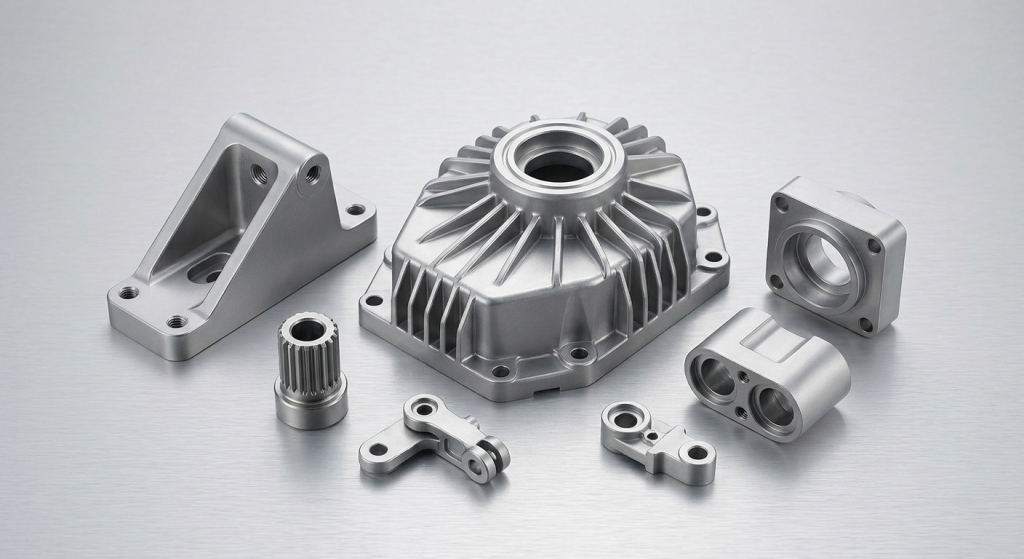
Zinc Alloy CNC Machining Applications
Electronics: Ideal for EMI/RFI shielding in connectors, sensors, and optical module housings.
Automotive: Used for high-strength, high-precision safety components, fuel systems, and decorative interior trim.
Medical: Perfect for surgical instrument handles and diagnostic equipment bases requiring superior corrosion resistance.
Industrial Hardware: Essential for heavy-duty gears, lock components, and pneumatic valves needing dimensional stability.
Advantages of Zinc CNC Machining
Superior Precision: Achieves tighter tolerances and thinner wall sections than aluminum or die casting.
Exceptional Surface Finish: Naturally smooth surfaces that easily accept premium plating, powder coating, and chrome finishes.
EMI Shielding: Provides inherent electromagnetic interference protection, ideal for sensitive electronic housings.
Cost-Effective Prototypes: Offers a high-speed, tool-less alternative to die casting for low-to-medium volume production.
Durability: Delivers high impact strength and excellent wear resistance for long-term industrial use.
Design for Manufacturing (DFM) Tips for Zinc Alloy Machining
Optimize your zinc designs for CNC machining with these four essential DFM rules to reduce costs and improve quality:
Wall Thickness: Maintain a minimum wall thickness as low as 0.5mm – 1mm. Zinc’s excellent fluidity and strength allow for much thinner walls than aluminum without sacrificing rigidity.
Internal Radii: Use internal corner radii larger than 1.5mm where possible. While zinc is highly machinable, generous radii allow for faster cutting speeds and extended tool life.
Draft Angles: Although primarily a CNC process, designing with minimal draft angles (0.5° to 1°) can ease the transition if you later move from CNC prototyping to high-volume die casting.
Surface Finishing: Account for a 0.02mm – 0.05mm dimensional change if planning for heavy electroplating or chrome finishing, as zinc alloys are ideal candidates for these premium coatings.
Aluminum CNC Machining FAQs
Zinc alloy is significantly denser than aluminum. While this makes zinc parts heavier, its superior strength allows for ultra-thin wall designs that can achieve similar weight profiles as thicker aluminum parts while providing better impact resistance.
Zinc alloys have a lower melting point compared to steel or aluminum. For applications exceeding 100°C (212°F), we recommend a thorough DFM review to ensure structural integrity, as zinc is best suited for high-strength performance in moderate temperature ranges.
Due to its high fluidity and excellent machinability, zinc generates less heat during cutting than stainless steel. We utilize specific high-speed spindles and specialized lubricants to prevent material buildup on the tool, ensuring the ±0.005mm precision you require.
Zinc possesses natural corrosion resistance by forming a protective carbonate layer when exposed to air. However, for marine or harsh chemical environments, we strongly suggest leveraging zinc's excellent plating adhesion for a secondary protective coating like chrome or nickel.
Absolutely. Because we use Zamak 3 and Zamak 5—the same alloys used in high-volume die casting—your CNC prototypes will have identical mechanical properties to your future mass-produced parts, making the testing and scaling process seamless.
Get in touch with us
Contact our engineering experts today. We will analyze your designs and provide the precision CNC machining solutions that best suit your project specifications.
sale@micromotorparts.com
+86 15377730575
*Our team will answer your inquiries within 24 hours.
*Your information will be kept strictly confidential.