
Custom Metal Transfer Die Stamping Services
Looking for a reliable partner for complex metal components? Our transfer molding processes are designed for excellence in manufacturing demanding industrial parts. By utilizing independent stations, we provide greater flexibility for part re-orientation and secondary operations during the stamping cycle.
Tolerance: Precise tolerances for mission-critical applications.
Material Range: Brass, Copper, Stainless Steel, and High-Strength Steel.
Advanced Features: Seamless deep drawing for superior depth-to-diameter ratios.
Expertise: Free DFM analysis to reduce material waste and production costs.
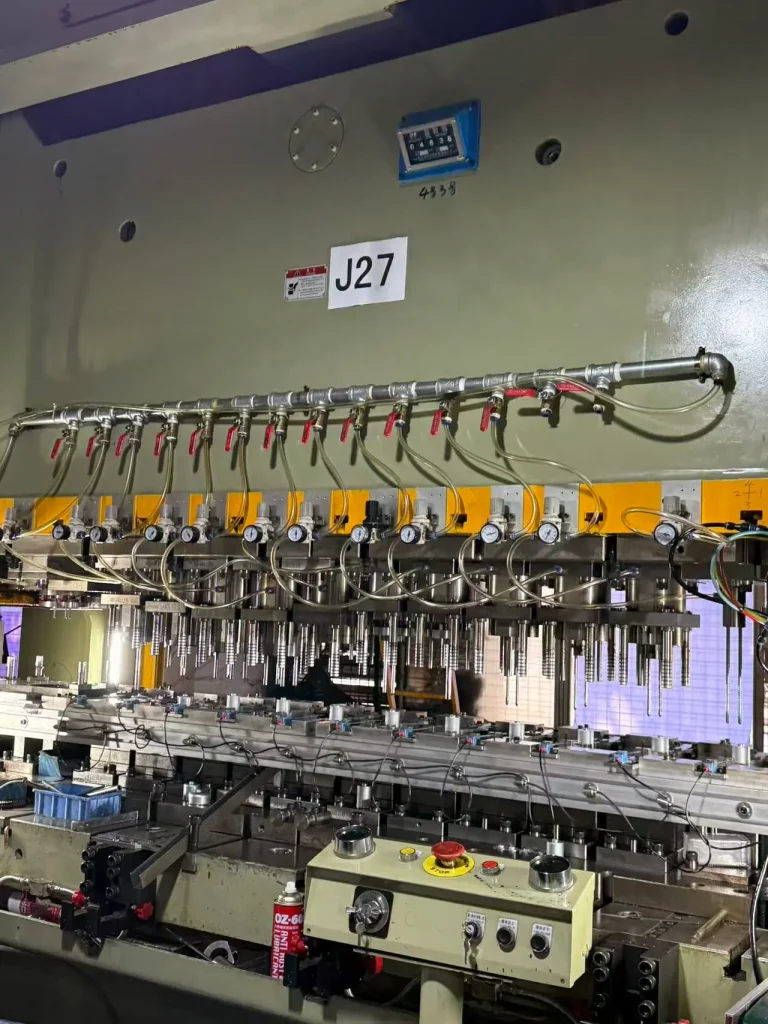
What Is Transfer Die Stamping?
Transfer die stamping is a precision metal forming process used for manufacturing complex parts that require multiple forming stages. Unlike progressive die stamping, where parts remain attached to a continuous strip, transfer die stamping moves individual workpieces from one station to the next during the press cycle.
This method is especially suitable for parts that need re-orientation, deeper forming, tighter dimensional control, or additional operations between stations. It is widely used for producing complex metal housings, brackets, covers, cups, and structural components for automotive, electronics, appliances, and industrial applications.
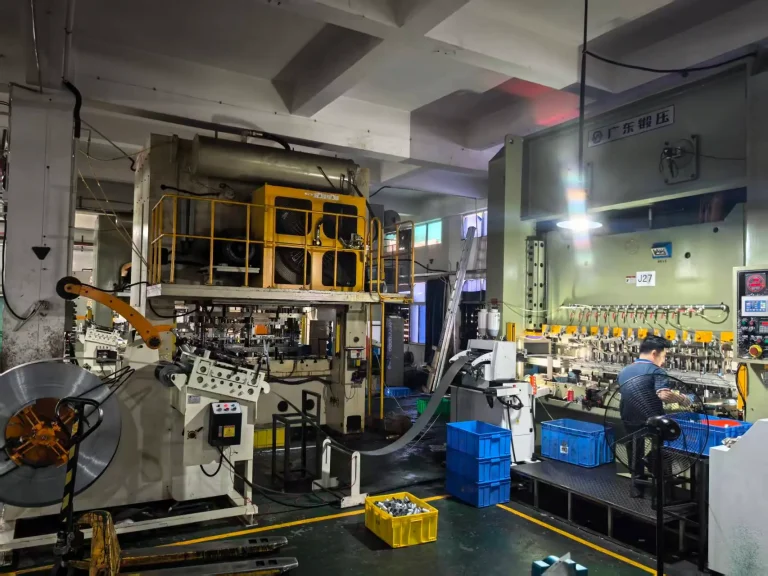
How Transfer Die Stamping Works
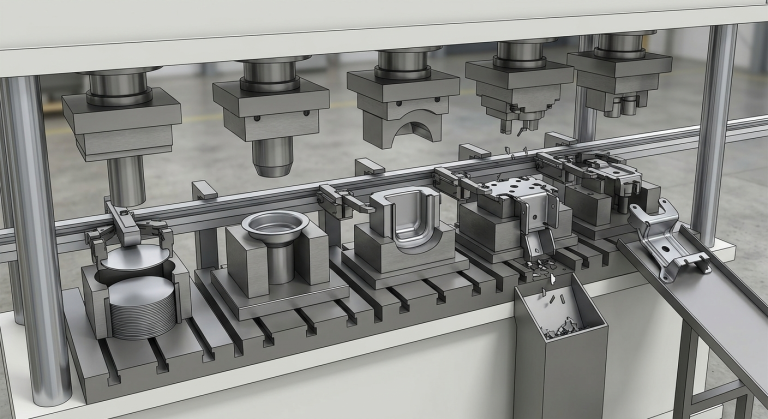
Transfer die stamping moves separate metal workpieces through multiple independent stations, with each station completing a specific forming operation. This process is ideal for complex metal parts that require re-orientation, deeper forming, or multiple secondary steps.
Step-by-Step Process:
- Blank Preparation: The metal blank is cut or prepared before entering the transfer die system.
- Part Transfer: The workpiece is transferred from one station to the next by a transfer mechanism instead of remaining attached to a strip.
- Multi-Stage Forming: Each station performs a specific operation such as drawing, bending, flanging, trimming, piercing, or reshaping.
- Re-Orientation: The part can be repositioned between stations when needed for more complex geometries.
- Final Completion: After all forming stages are completed, the finished part is discharged for inspection or secondary processing.
Key Advantages of Transfer Die Stamping
- Suitable for Complex Parts: Ideal for components that cannot be efficiently produced in a strip-connected progressive die process.
- Flexible Part Handling: Individual workpieces can be transferred, rotated, and repositioned between stations.
- Supports Deep Drawing: Well suited for parts with demanding depth-to-diameter ratios and multi-stage forming requirements.
- Better Forming Freedom: Easier to integrate trimming, flanging, reshaping, and secondary operations.
- Stable Production Efficiency: Suitable for medium-to-high volume production with good repeatability and process stability.
Main Limitations of Transfer Die Stamping
- Higher Tooling Complexity: Transfer die systems are generally more complex than simple stamping dies.
- Higher Initial Investment: Tooling and transfer mechanisms usually require a higher upfront cost.
- More Process Planning Required: Part transfer, station layout, and forming sequence must be carefully engineered.
- Longer Tool Development Time: Compared with simpler die systems, transfer die projects may take longer to develop and optimize.
- Not Ideal for Every Part: Simple flat parts may be better suited to progressive or compound die stamping.
Transfer Die Stamping: Pros vs. Cons
| Advantages | Disadvantages |
| High Precision: Supports complex geometries and multi-stage forming with stable dimensional control. | Higher Tooling Cost: Transfer die systems require more complex tooling and transfer mechanisms. |
| Flexible Part Handling: Independent stations allow part transfer, re-orientation, and secondary forming operations. | More Process Planning: Station layout, part transfer, and forming sequence must be carefully engineered. |
| Better for Complex Parts: Ideal for deep drawn shapes and components that cannot remain attached to a strip. | Longer Tool Development: Compared with simpler die systems, development and setup usually take more time. |
| Stable Volume Production: Suitable for medium-to-high volume production with good repeatability and process consistency. | Not Ideal for Simple Parts: Flat or less complex parts may be better suited to progressive or compound die stamping. |
Why Choose Our Precision Stamping Services?
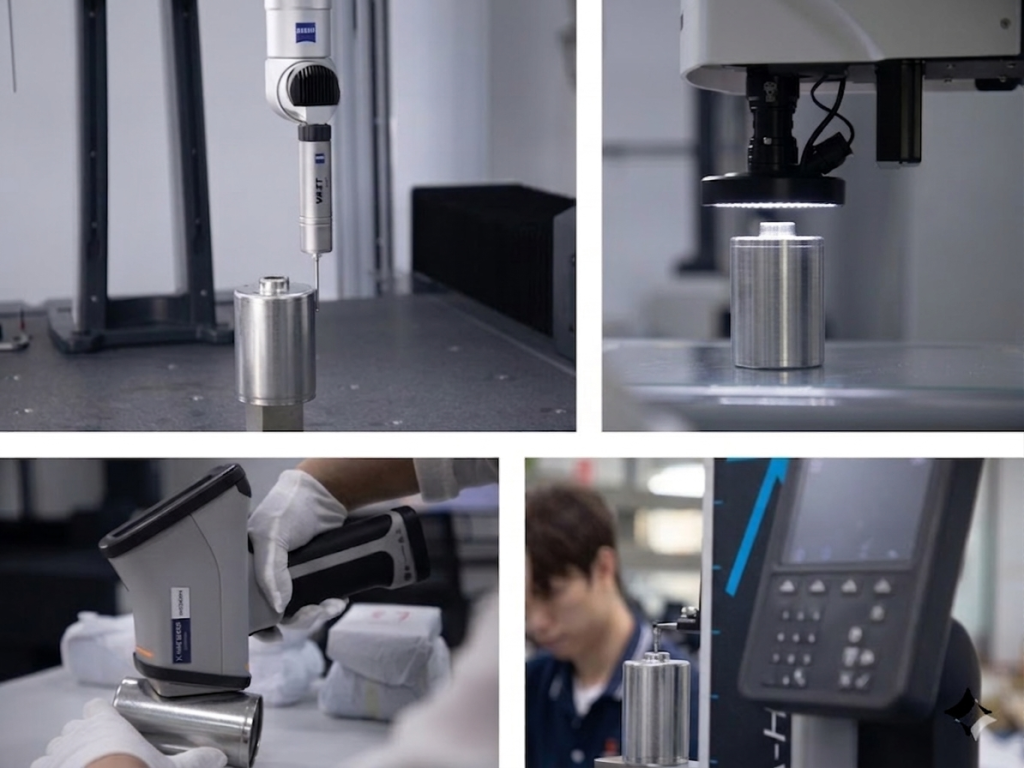
- Precision Engineering: Tight tolerances and stable quality backed by strict inspection control.
- One-Stop Manufacturing: Integrated support for metal stamping, CNC machining, die casting, and secondary processing.
- Free DFM Support: Professional design-for-manufacturing analysis to improve production feasibility and reduce cost.
- Fast Turnaround: Efficient tooling development and production scheduling for prototypes and volume orders.
- Reliable Partnership: Proven experience in delivering high-quality custom metal components for global industrial markets.
Frequently Asked Questions (FAQ)
A: Depending on part complexity, tooling design and fabrication usually take 4 to 8 weeks. For simpler parts, lead time may be shorter. After reviewing your drawings and DFM requirements, we will provide a detailed project timeline for tooling, sampling, and mass production.
A: We commonly process stainless steel, carbon steel, aluminum, copper, and brass. Material selection depends on your part geometry, forming depth, tolerance requirements, strength needs, and surface finish expectations.
A: Transfer die stamping is generally better suited for complex parts, deeper drawn shapes, and components that require re-orientation or multiple forming stages. Progressive die stamping is often more efficient for strip-connected parts and very high-volume production of simpler geometries. We can recommend the most suitable process based on your part design and production volume.
A: Yes. We can support a range of secondary operations, including trimming, deburring, tapping, CNC machining, surface treatment, cleaning, and assembly, depending on your project requirements. This helps reduce outsourcing steps and improve overall production efficiency.
A: To provide an accurate quotation, please share your 3D CAD files (STEP, IGES, or X_T), 2D drawings with tolerances, material requirements, surface finish requirements, estimated order quantity, and any special forming or inspection requirements. If available, application details and annual volume estimates will also help us evaluate the best production solution.
Get in touch with us
Contact our engineering experts today. We will analyze your designs and provide the precision CNC machining solutions that best suit your project specifications.
sale@micromotorparts.com
+86 15377730575
*Our team will answer your inquiries within 24 hours.
*Your information will be kept strictly confidential.