
High-Precision 5-Axis CNC Machining Services
Manufacturing complex geometries in a single setup with ±0.005mm tolerance. Reduced lead times and zero setup errors for aerospace & medical parts.
What is 5-Axis CNC Machining?
5-Axis CNC Machining is a high-precision manufacturing process where a computer-controlled cutting tool (or the workpiece) moves across five different axes simultaneously. While traditional machining uses X, Y, and Z (linear axes), 5-axis adds two rotational axes (A and B, or C) to approach the part from virtually any direction.
Why Choose 5-Axis Machining for Your Complex Projects?
Complex Geometries
It allows for the creation of intricate shapes—like turbine blades or impellers—that are impossible with 3-axis machines.
Single Setup
You can machine five sides of a part in one go, which eliminates human error from re-clamping and drastically improves accuracy.
Superior Finish
By tilting the tool to maintain the optimum cutting position, it achieves a much smoother surface finish and extends tool life.
Our 5-Axis Machining Capabilities & Specifications
we leverage state-of-the-art 5-axis simultaneous milling centers to handle the most demanding engineering challenges. Our facility is equipped to provide high-tolerance solutions for complex aerospace components, medical implants, and high-performance industrial parts.
| Feature | Specification | Why It Matters for Your Project |
| Max Workpiece Size | 800mm x 650mm x 500mm | Supports large-scale components with complex internal geometries. |
| Positioning Accuracy | ±0.005mm | Ensures ultra-tight tolerances for mission-critical applications. |
| Repeatability | ±0.002mm | Guarantees consistent quality across high-volume production runs. |
| Spindle Speed | Up to 24,000 RPM | Enables superior surface finishes and efficient micro-machining. |
| Drive System | High-Torque Direct Drive | Provides smooth, continuous motion for flawless curved surfaces. |
| Materials | Titanium, Inconel, SS, Aluminum | Expertise in machining both lightweight alloys and superalloys. |
3-Axis vs. 4-Axis vs. 5-Axis Comparison
Choosing the right machining process is a balance between part complexity, precision requirements, and total production cost. While 5-axis machining involves a higher hourly rate, it often results in a lower total cost per part for complex geometries by eliminating multiple setups and manual labor.
| Feature | 3-Axis Machining | 4-Axis Machining | 5-Axis Machining |
| Movement | X, Y, Z axes | X, Y, Z + A (rotation) | X, Y, Z + A, B (simultaneous) |
| Best For | Simple parts, flat surfaces | Cylindrical parts, side cuts | Complex curves, deep cavities |
| Setup Times | Multiple setups required | Reduced setups | Single setup (One-and-Done) |
| Precision | Moderate (setup errors) | High | Highest (no re-clamping) |
| Lead Time | Longer (due to manual flips) | Moderate | Shortest (automated motion) |
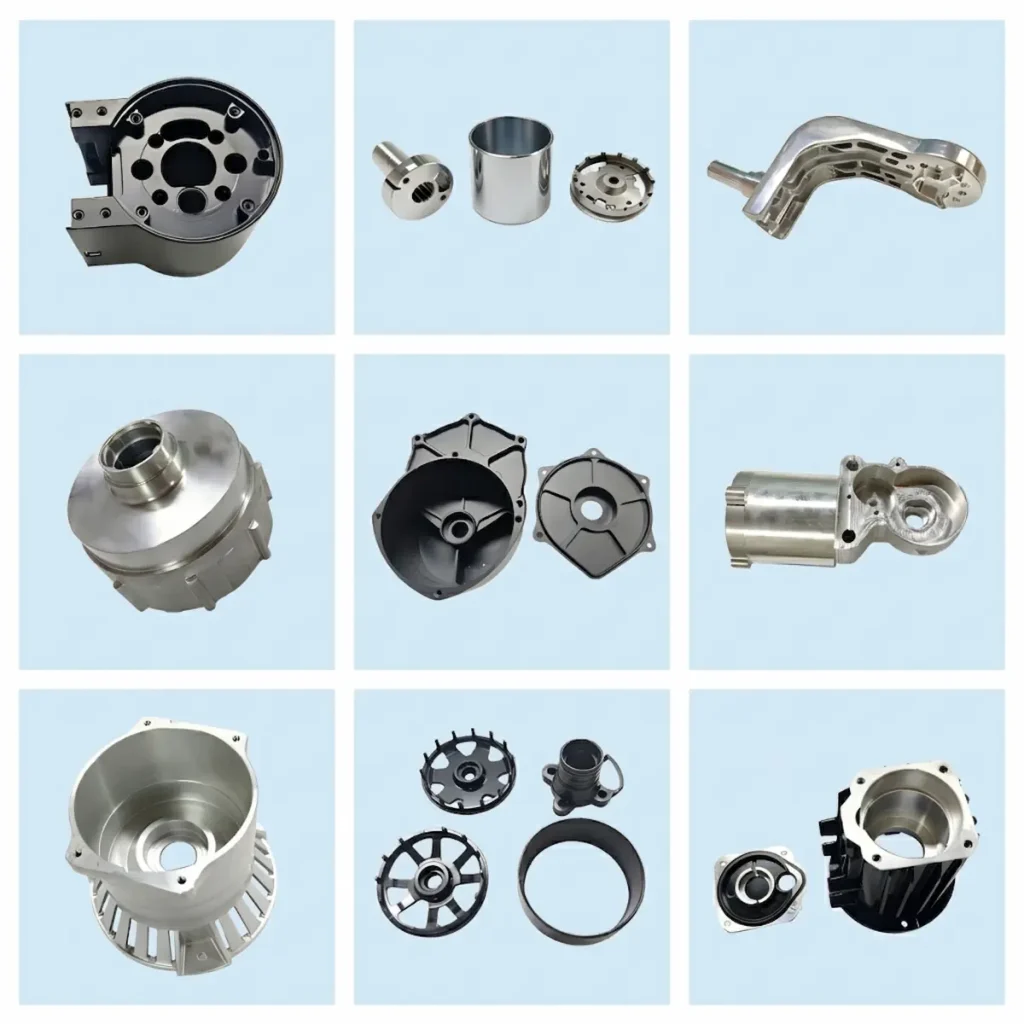
High-Complexity Components We Manufacture
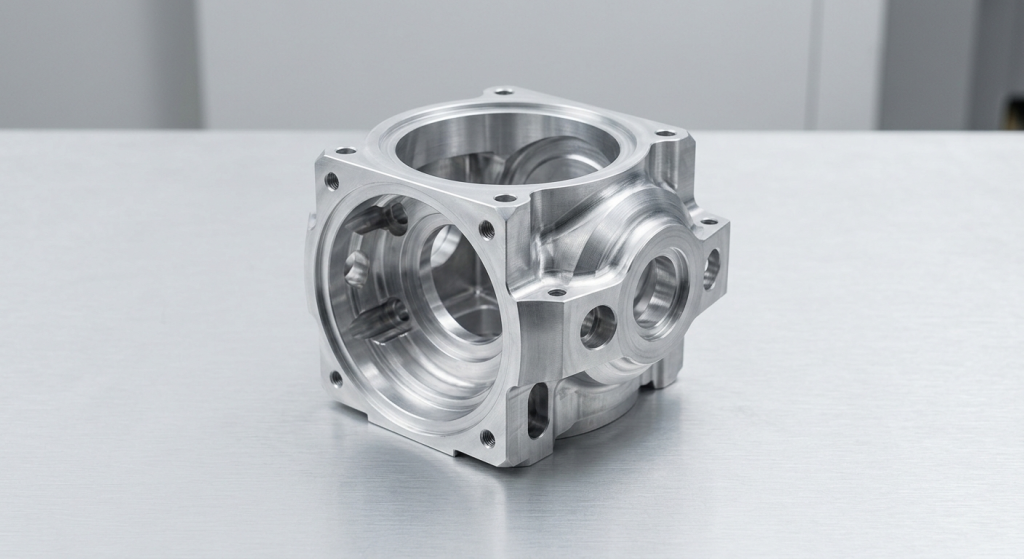
Complex aluminum housings for precision equipment
Multi-face CNC structural parts with tight tolerances
Custom brackets, covers, and irregular metal components
Design Guidelines for 5-Axis CNC Machining
Optimizing your design for 5-axis production can significantly reduce cycle times and material waste. By following these professional DFM principles, you ensure your parts are not only manufacturable but also cost-optimized for high-precision output.
One of the primary advantages of 5-axis machining is the ability to tilt the workpiece to reach deep cavities. To maximize this:
Design for Shorter Tools: Use the 5-axis rotation to avoid long, slender tools. Shorter tools are more rigid, allowing for higher feed rates and a much better surface finish.
Avoid Deep, Narrow Pockets: While 5-axis can reach them, extreme depth-to-width ratios still increase the risk of tool deflection and breakage.
The goal of 5-axis design should be to finish the part in a single setup.
Access Windows: Ensure that your design provides clear "access windows" for the spindle. If features are hidden behind complex overhangs that require a manual flip, the cost-benefit of using a 5-axis machine is diminished.
Datum Selection: Choose a primary datum that allows the machine to access the maximum number of features without interference from the work-holding fixtures.
Internal Radii: Always design internal corners with a radius slightly larger than the cutting tool (e.g., if using a 6mm end mill, use a 3.5mm radius). This prevents the tool from "burying" into the corner, which causes chatter and poor surface quality.
Continuous Surfaces: 5-axis machines excel at "simultaneous" movement. Designing smooth, continuous transitions rather than sharp step-downs allows the machine to maintain a constant chip load and higher speed.
When working with high-performance alloys like Inconel 718 or Titanium, material cost is a major factor.
Stock Optimization: Design parts to fit within standard billet sizes to reduce waste.
Thin Walls: While 5-axis is precise, avoid wall thicknesses below 0.5mm unless absolutely necessary, as the cutting pressure can cause deformation in even the most advanced setups.
Seeking assistance from an engineer.
Quality Assurance
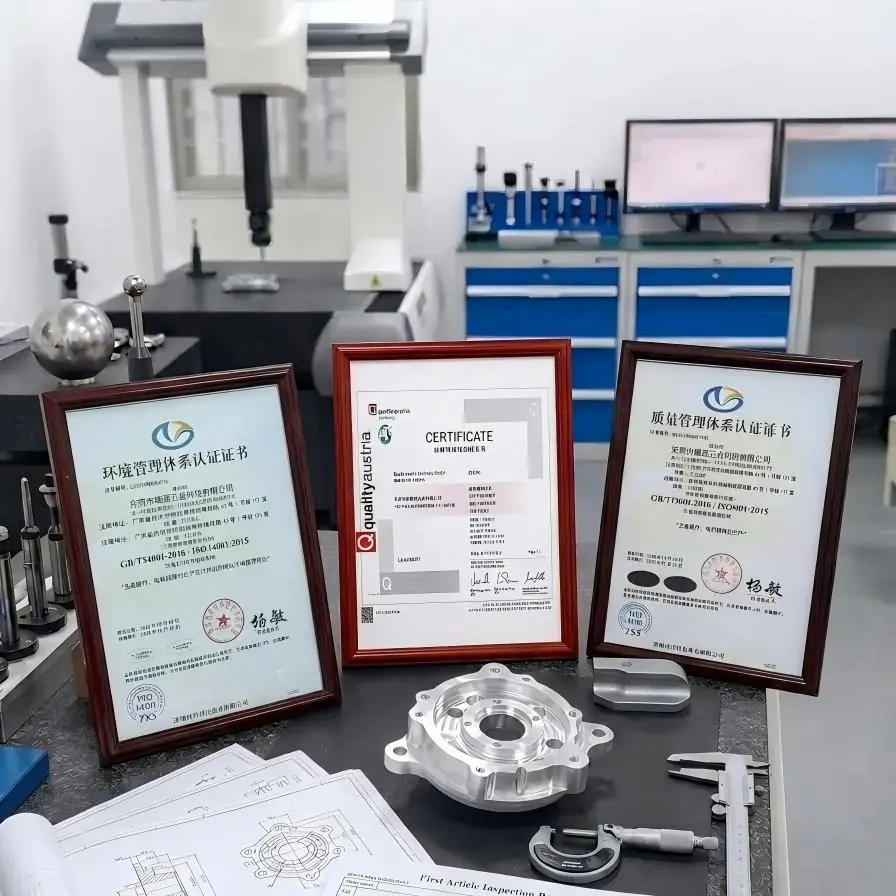
Quality is the cornerstone of our 5-axis CNC machining services. To ensure that every component meets your exact specifications, we implement a multi-layered Quality Management System (QMS) that tracks parts from raw material arrival to final shipment.
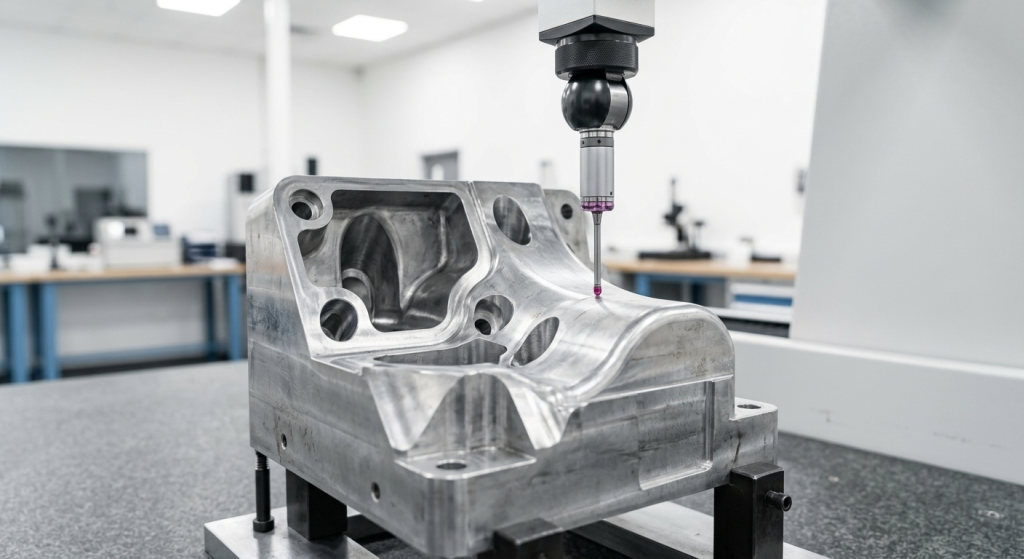
Precision Verification with CMM
For complex geometries produced by 5-axis milling, manual inspection is often insufficient. We utilize high-precision Coordinate Measuring Machines (CMM) to verify:
Geometric Dimensioning and Tolerancing (GD&T): Ensuring complex spatial relationships and tolerances as tight as $\pm$0.005mm.
Surface Profile Accuracy: Automated scanning of 3D curved surfaces against your original CAD model.
Feature Correlation: Confirming that holes, slots, and bores are perfectly aligned across all five axes.
Material Integrity & Traceability
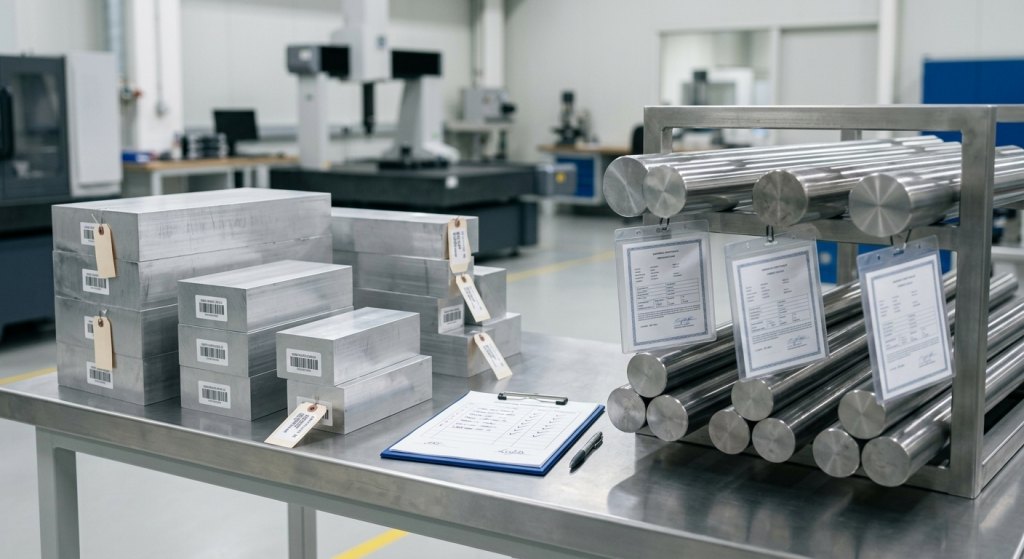
We understand that material performance is critical in high-stress environments.
Material Test Reports (MTRs): Every order is accompanied by full chemical and physical analysis reports, ensuring you receive the exact grade of Titanium, Inconel, or Stainless Steel specified.
Raw Material Inspection: We conduct ultrasonic testing or hardness testing upon request to verify the internal integrity of the alloys before machining begins.
Our Certifications & Standards
Our facility operates under strict international standards to guarantee consistency and safety:
ISO 9001:2015 Certified: Our quality management processes are audited to ensure continuous improvement and customer satisfaction.
In-Process Probing: We use Renishaw® on-machine probing to detect deviations in real-time, allowing for automatic offsets and eliminating scrap.
Final Documentation: Along with your parts, we provide comprehensive inspection reports, Certificate of Conformance (CoC), and plating/heat treatment certifications where applicable.
Common Questions About 5-Axis CNC Machining
Find quick answers to the most common technical and commercial queries regarding our 5-axis milling services.
Answer: While the hourly rate for a 5-axis machine is higher, the total cost per part is often lower for complex designs. By completing the part in a single setup, you eliminate the cost of multiple custom fixtures and significantly reduce manual labor hours. For simple, flat parts, 3-axis remains more economical, but for complex geometries, 5-axis is the superior investment.
Answer: Our standard lead time is typically 2 to 4 weeks, depending on material availability and part complexity. Because 5-axis machining reduces the need for multiple setups and manual repositioning, we can often deliver complex components faster than traditional machine shops using 3-axis or 4-axis processes.
Answer: We consistently achieve positioning accuracies of $\pm$0.005mm and repeatability of $\pm$0.002mm. Our use of high-end Swiss and Japanese 5-axis centers, combined with in-process Renishaw® probing, ensures that even the most intricate aerospace and medical components meet your exact engineering specifications.
Answer: 5-axis machining is highly effective for a wide range of materials, especially "difficult-to-cut" alloys. We specialize in Titanium (Grade 5), Inconel 718, Stainless Steel (304/316), and Aerospace-grade Aluminum (7075-T6). The ability to maintain optimal tool-to-part orientation makes it ideal for these tough or high-value materials.
Answer: Yes. To provide an accurate 5-axis quote and perform a Reachability Analysis, we require a 3D CAD file (preferably in STEP, IGES, or X_T format). This allows our engineers to simulate the toolpaths and identify any potential manufacturing challenges before the production begins.
Get in touch with us
Contact our engineering experts today. We will analyze your designs and provide the precision CNC machining solutions that best suit your project specifications.
sale@micromotorparts.com
+86 15377730575
*Our team will answer your inquiries within 24 hours.
*Your information will be kept strictly confidential.