

What is CNC Punching?
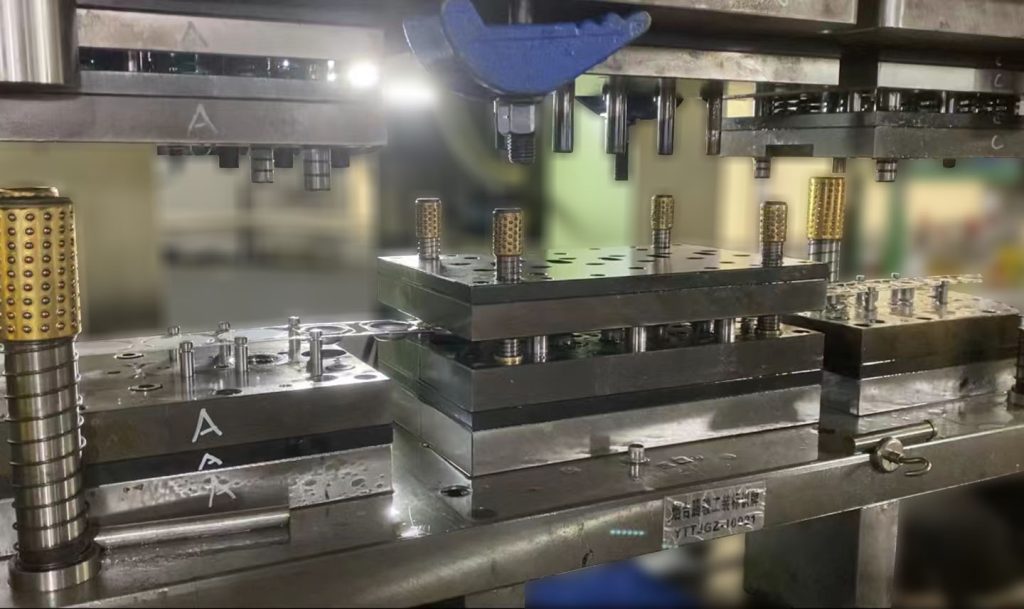
CNC punching is a highly efficient manufacturing solution for processing sheet metal with speed and accuracy. Unlike traditional stamping, CNC punch presses are programmed to move metal sheets along X and Y axes, utilizing a turret of specialized tooling to “punch” out complex geometries. This process is not only ideal for high-volume production but also supports forming operations like louvers, ribs, and dimples—offering a versatile and cost-effective alternative to laser cutting for perforated parts and industrial enclosures.
How does CNC punching work?
CNC punching is a programmed manufacturing process that uses a high-force punch press to shape and cut sheet metal. The process relies on the interaction between three main components: the CNC controller, the workpiece (metal sheet), and the tooling (punch and die).

1. Programming and CAD/CAM Integration
The process begins with a digital design (CAD). This is converted into G-code, which provides the CNC machine with precise coordinates and instructions on which tools to select from the turret.

2. Material Positioning
The metal sheet is secured by hydraulic clamps on a high-speed moving table. The machine moves the sheet along the X and Y axes with extreme speed and precision to position the exact area to be processed under the ram.

3. The Punch and Die Mechanism
CNC punching works by driving a punch (upper tool) through the metal sheet into a matching die (lower tool). This high-speed shearing action, controlled by a CNC turret, instantly creates precise holes or shapes by pushing the metal "slug" through the die for a clean finish.
Advantages of CNC Punching
High-Speed Efficiency: Faster than laser cutting for repetitive patterns, grids, and perforated holes.
Cost-Effective Production: Lower operational costs for high-volume runs due to high stroke rates and automated tool changes.
In-Machine Forming: Unique ability to perform forming operations like louvers, ribs, dimples, and countersinks without secondary processes.
High Precision & Consistency: CNC automation ensures tight tolerances ±0.1mm and perfect repeatability for complex designs.
Minimal Heat Distortion: Unlike laser or plasma cutting, punching is a cold process, preventing material warping or heat-affected zones (HAZ).
Disadvantages of CNC Punching
Tooling Constraints: You are limited to the shapes available in your turret. Custom or highly irregular geometries may require expensive custom tooling.
Material Thickness Limits: Typically restricted to thinner gauges (usually up to 6mm). It struggles with very thick plates where laser cutting excels.
Surface Marking: The physical contact of the “stripper plate” and the movement of the sheet can sometimes leave minor scratches or nibble marks on the material surface.
High Initial Setup Cost: Setting up the tools and programming for a new job takes time, making it less ideal for small, one-off prototypes compared to “tool-less” laser cutting.
Noise and Vibration: The mechanical striking process is significantly louder and creates more vibration than thermal cutting methods.
Types of CNC machines

Turret style CNC punching machine
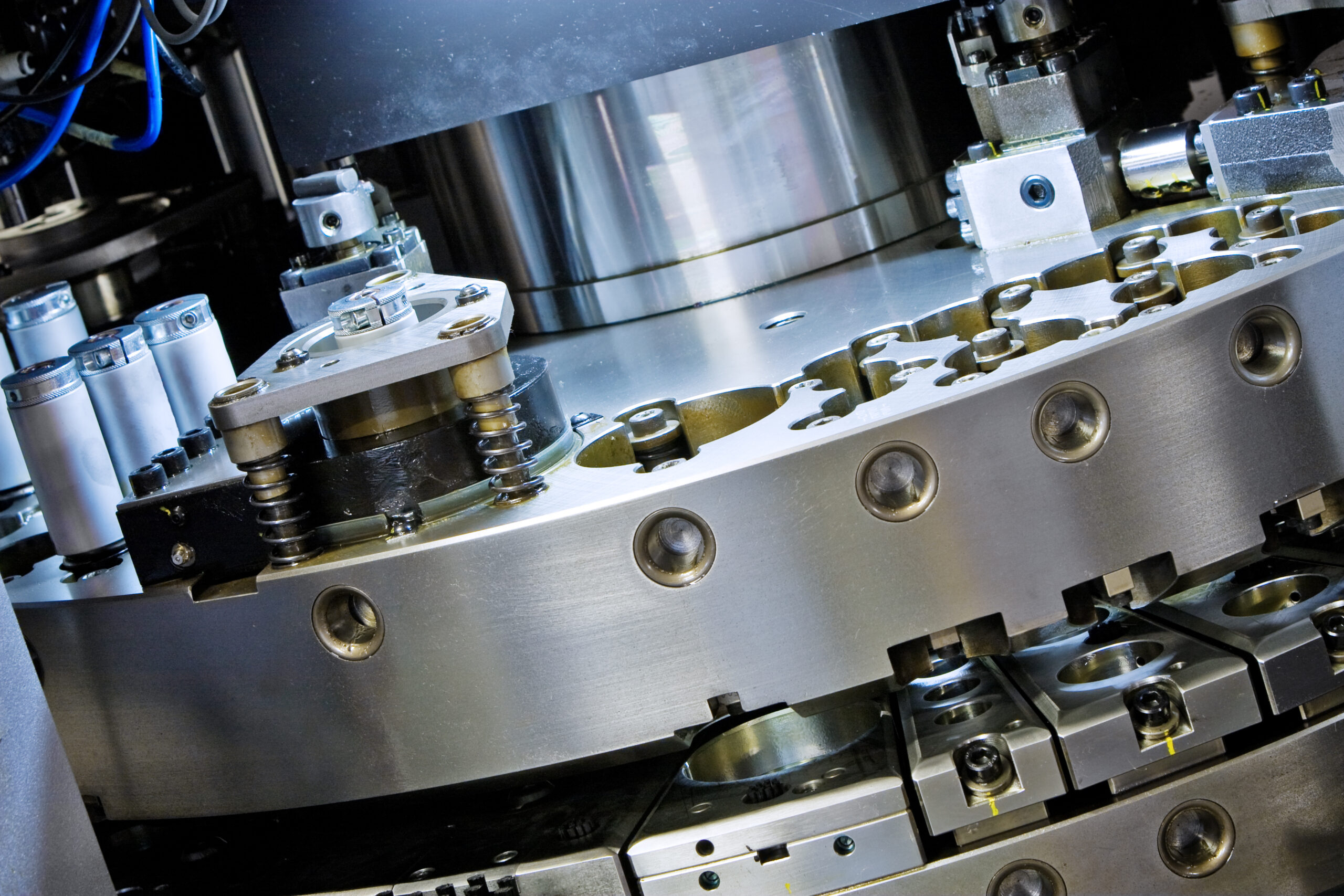
A Turret CNC Punching Machine features a circular turret that houses a vast library of specialized tools in fixed positions. Modern systems often include Auto-Index stations—rotational tools that can turn to any angle—providing maximum design flexibility. With the capacity to hold 60+ tools simultaneously, these machines enable the rapid fabrication of both simple holes and complex geometries without the downtime of manual tool changes, significantly reducing lead times for high-volume production.
Linear Rail CNC Punching Machines
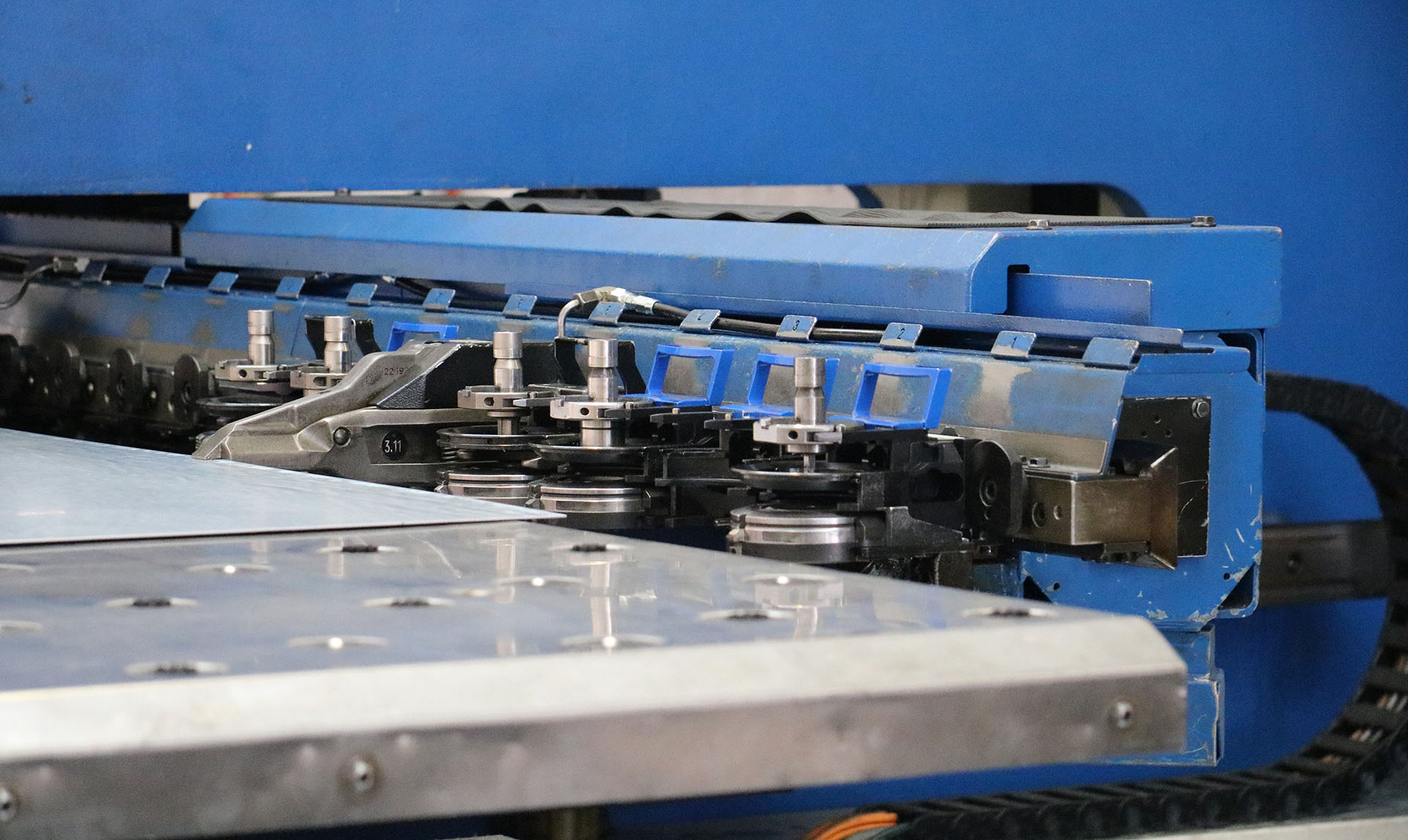
A Linear Style CNC Punching Machine utilizes a tool magazine where each tool is loaded individually into a single, high-performance punching head. This configuration allows for 360° rotation (Auto-Index) of every tool, providing unmatched flexibility for complex shapes and nesting. A key advantage of the linear rail system is the concurrent setup capability; tools can be staged while the machine is running, minimizing changeover times and maximizing uptime for diverse, short-run production cycles.
CNC Punching Machine Technology: Turret vs. Linear Rail
| Feature | Turret Style CNC Punching | Linear Rail Style CNC Punching |
| Tool Capacity | Higher: Houses 60+ tools in a circular turret for complex parts. | Moderate: Tools are stored in a linear magazine for single-head loading. |
| Production Speed | Ultra-High: Rapid firing and quick turret rotation, ideal for mass production. | High: Fast processing with unmatched agility for custom geometries. |
| Rotation (Auto-Index) | Limited: Only specific “Auto-Index” stations can rotate tools. | Full 360° Rotation: Every tool in the magazine can rotate to any angle. |
| Setup & Changeover | Standard: Best for long-run projects once the turret is configured. | Fastest: Supports concurrent setup, minimizing downtime between jobs. |
| Best Application | High-volume, standardized components and repetitive patterns. | Short-run, high-precision parts and complex nesting layouts. |
Precision CNC Punching Materials & Applications
Materials We Work With
Our high-speed CNC punching services are compatible with a wide range of metals, ensuring the right strength, weight, and finish for your specific project.
Aluminum: Lightweight and corrosion-resistant, ideal for aerospace and electronics.
Stainless Steel: High durability and heat resistance for medical and food-grade applications.
Carbon Steel (Cold Rolled/Hot Rolled): Cost-effective and strong for structural components.
Copper: Excellent electrical and thermal conductivity for power distribution.
Brass: Superior machinability and aesthetic appeal for decorative and electrical parts.
Galvanized Steel: Enhanced rust protection for outdoor and industrial environments.
Industrial Applications
From simple brackets to complex assemblies, our precision CNC punching technology supports diverse sectors, including electronics, telecommunications, and automotive.
Custom Enclosures: Precision-punched chassis and housings for servers, medical devices, and power supplies.
Support Brackets: Heavy-duty and lightweight mounting brackets tailored for industrial machinery.
Ventilation Grills & Perforated Panels: High-speed patterns for airflow management and decorative architectural features.
Electrical Panels & Busbars: Accurately punched components for switchgear and electrical distribution boards.
Machine Covers: Protective shielding and panels for manufacturing equipment.
Deep Drawn Stamping: Frequently Asked Questions
Typically, CNC punching is most effective for sheet metal up to 6.0mm for aluminum and 3.0mm for stainless steel. For thicker plates, we usually recommend laser cutting to maintain edge quality and prevent excessive tool wear.
Yes. Unlike laser cutting, CNC punching can perform mechanical forming in a single hit. This includes creating louvers for airflow, countersinks for flush screws, dimples for positioning, and even bridge lances for wire management.
CNC punching is a "cold" process, meaning there is no heat-affected zone (HAZ). This prevents material warping and discoloration. While a tiny "nibble" mark may be visible on curved edges, our high-precision tooling ensures a clean, burr-free finish for most industrial applications.
While CNC punching is highly optimized for high-volume production, we support everything from prototypes to large-scale runs. However, because there is an initial setup time for tool configuration, the price per part significantly drops as the order volume increases.
For the fastest and most accurate quoting, we prefer DXF, DWG, or STEP files. These formats allow our engineers to quickly calculate tool paths and material utilization, ensuring we provide you with a competitive price within 24–48 hours.
Get in touch with us
Contact our engineering experts today. We will analyze your designs and provide the precision CNC machining solutions that best suit your project specifications.
sale@micromotorparts.com
+86 15377730575
*Our team will answer your inquiries within 24 hours.
*Your information will be kept strictly confidential.