
CNC Machining for Stainless Steel Parts
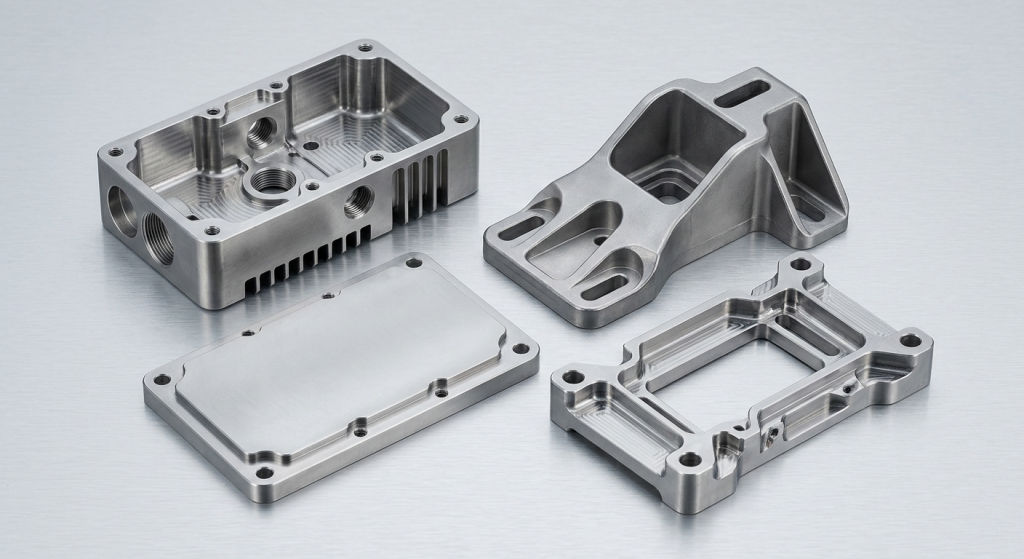
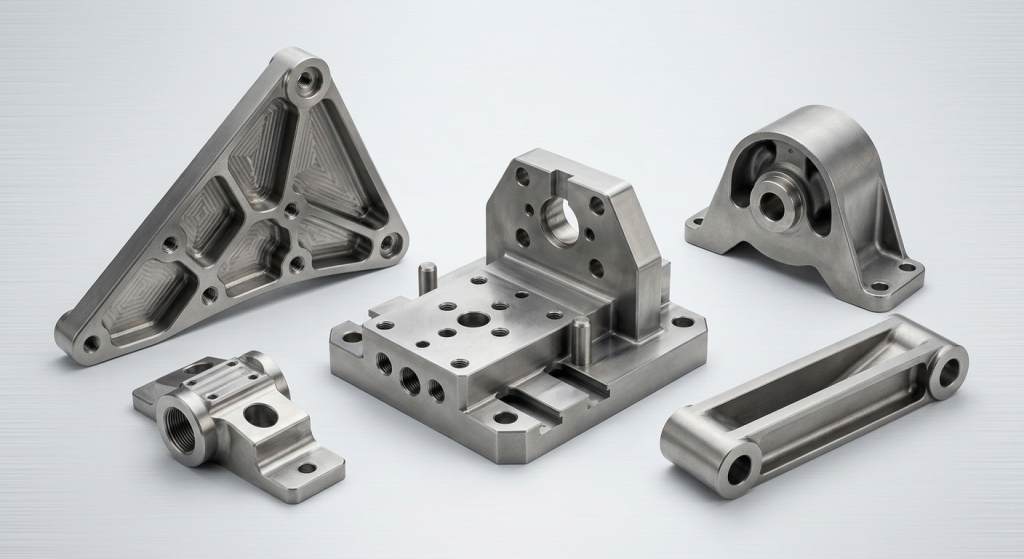
To address the challenges of machining high-hardness stainless steel, we utilize advanced five-axis simultaneous machining technology to ensure that every complex part has a perfect surface finish and dimensional accuracy.
Why Choose Our Stainless Steel Processing Services?
Expertise in Tough Materials
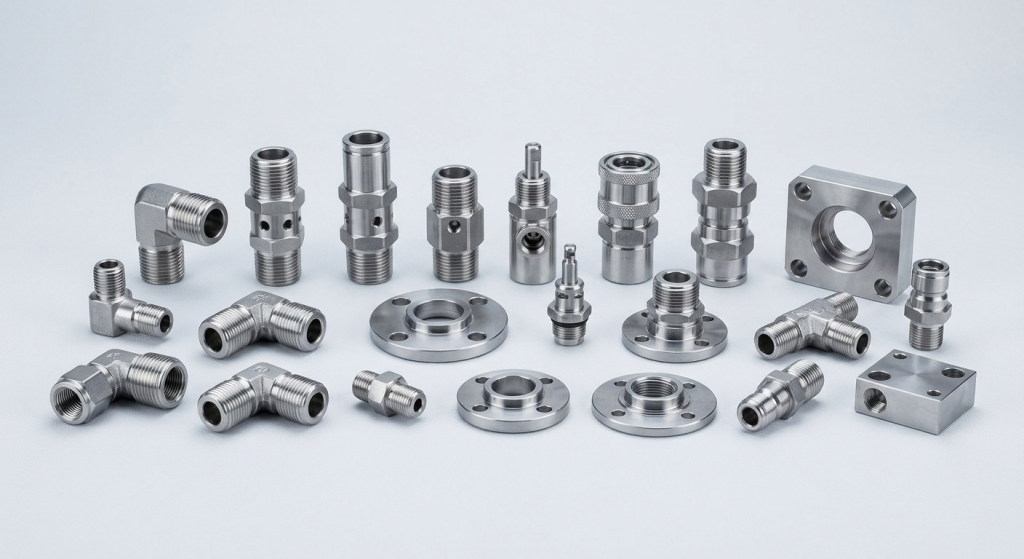
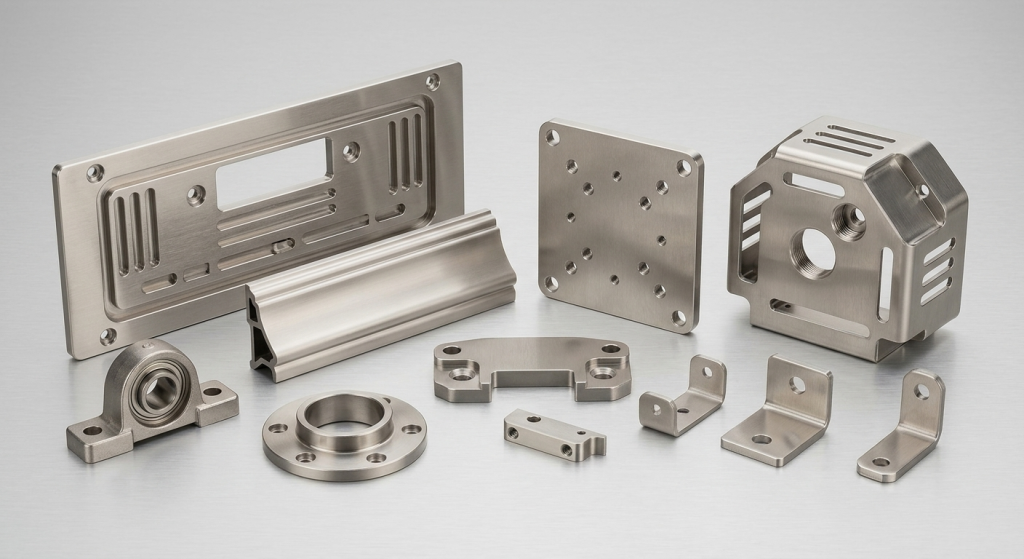
Stainless steel alloys offer superior corrosion resistance and durability. We specialize in optimizing cutting parameters to reduce common issues like work hardening, ensuring a high-quality surface finish and consistent dimensions even for the toughest 316L or 17-4 PH grades.
High-Precision Multi-Axis Machining
Leveraging advanced mill-turn and 5-axis technology, we produce complex stainless steel components in a single setup. This process eliminates positional errors from secondary handling, ensuring strict adherence to $\pm 0.005\text{mm}$ tolerances for medical and aerospace parts.
Stainless-Specific DFM Support
Our engineers go beyond automated checks. We provide professional feedback on your stainless steel designs, offering optimization tips for wall thickness, internal radii, and thread specifications to prevent tool breakage and minimize manufacturing costs.
Selection of Premium Stainless Steel Alloys
| Alloy Grade | Technical Characteristics | Typical Applications |
| 304/304L |
304/304L is the most versatile stainless steel with excellent formability and weldability. It provides good corrosion resistance for general industrial use and is commonly chosen for parts requiring high machining and welding flexibility.
|
Used in kitchen equipment, architectural trim, storage tanks, and fasteners, it is ideal for manufacturing housings, structural supports, and lightweight components. |
| 316/316L |
Known as “marine grade” due to its superior resistance to chlorides and acids, 316/316L is highly suitable for use in corrosive environments. It offers excellent corrosion resistance and strength at elevated temperatures.
|
Commonly used in medical implants, chemical processing, marine hardware, and food production environments. It is ideal for applications where corrosion resistance is critical. |
| 17-4PH |
17-4PH is a precipitation-hardening stainless steel that combines high strength with excellent corrosion resistance. It is often used in demanding applications requiring both high strength and hardness.
|
Widely used in aerospace components, turbine blades, nuclear parts, and high-pressure valves. It is perfect for manufacturing high-performance mechanical parts requiring durability and precision. |
| 430 |
430 is a ferritic, non-hardenable stainless steel grade that offers good corrosion and oxidation resistance. It is magnetic and cost-effective, making it ideal for applications where strength is not the only priority.
|
Common in automotive trim, household appliances, and industrial roofing. It is often used in low-cost, high-durability applications requiring basic corrosion resistance. |
What is Stainless Steel?
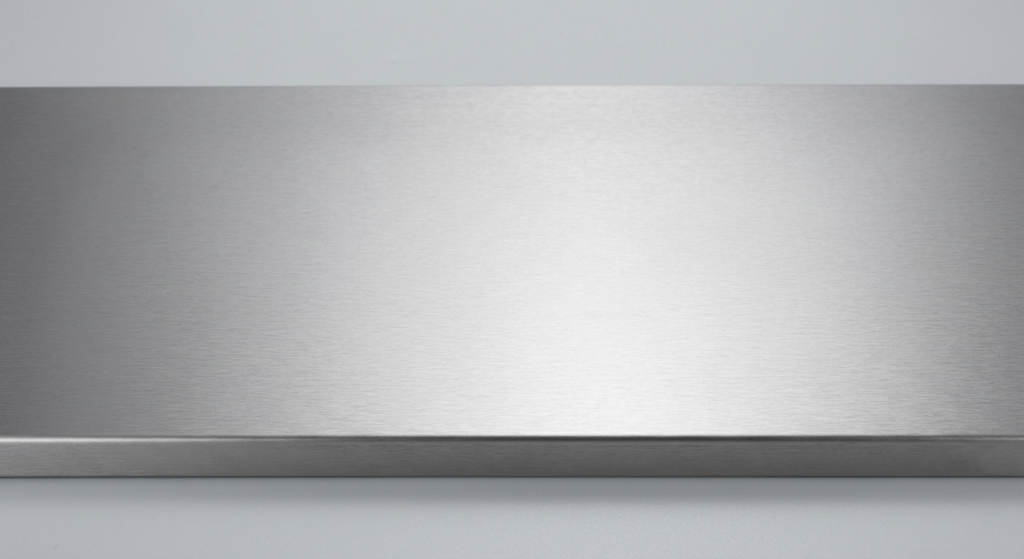
Stainless steel is a versatile iron-based alloy containing a minimum of 10.5% chromium. This composition creates a self-healing chromium oxide layer that provides exceptional corrosion resistance, high tensile strength, and durability in extreme temperatures. Unlike carbon steel, it does not rust or stain easily when exposed to water, making it the premier choice for demanding industrial environments.
Stainless Steel Machining Applications
Medical & Healthcare: Surgical instruments and orthopedic implants made from biocompatible 316L.
Aerospace & Defense: High-strength engine valves and actuators using 17-4 PH for extreme conditions.
Food & Beverage: Sanitary mixing blades and pumps with non-porous surfaces for hygiene.
Chemical & Marine: Corrosion-resistant marine hardware and agitators designed for harsh environments.
Automotive: Durable exhaust manifolds and fuel rails with high oxidation resistance.
Advantages of Stainless Steel
Extreme Corrosion Resistance: High chromium content prevents rust in harsh or sterile environments, ensuring an exceptionally long service life.
Rock-Solid Precision: Advanced 5-axis machining minimizes vibration, securing tight $\pm0.005$mm tolerances and mirror-like surface finishes.
High Strength-to-Weight Ratio: Superior material hardness allows for thinner, lightweight designs without compromising structural integrity.
Lower Total Cost: Strategic DFM optimization reduces material waste and tool wear, significantly cutting long-term lifecycle expenses.
Design for Manufacturing (DFM) Tips for Stainless Steel Machining
Wall Thickness: Maintain a minimum wall thickness of 1.5mm to ensure structural rigidity and prevent thermal deformation during heavy cutting.
Internal Radii: Use internal corner radii larger than 3mm to allow for sturdier tools and faster machining speeds.
Thread Depth: Limit thread depth to 2x diameter (2D) to reduce the risk of tap breakage in tough stainless alloys.
Hole Placement: Keep holes at least 2x diameter away from edges to prevent work hardening and material tearing.
Stainless Steel CNC Machining FAQs
For standard geometries and stock materials like SS304 or SS316L, we offer a rapid turnaround as fast as 24 to 48 hours. Complex 5-axis components may require additional time for precision calibration and quality inspection.
Yes. We provide full-service solutions including H900/H1150 heat treatment for 17-4 PH to achieve specific hardness levels, as well as citric or nitric passivation to maximize the corrosion resistance of your finished parts.
To lower costs, we recommend limiting thread depths to 2x diameter, avoiding deep narrow pockets that cause tool wear, and maintaining a minimum wall thickness of 1.5mm to prevent vibration and secondary rework.
SS304 is the cost-effective choice for general industrial use. However, if your parts will be exposed to saltwater, chemicals, or medical environments, we recommend SS316L due to its superior resistance to chloride-induced pitting.
Leveraging our high-rigidity CNC centers and specialized tooling, we consistently achieve precision tolerances as tight as $\pm 0.005\text{mm}$. We also perform 100% dimensional inspection to ensure stability in high-hardness alloy production.
Get in touch with us
Contact our engineering experts today. We will analyze your designs and provide the precision CNC machining solutions that best suit your project specifications.
sale@micromotorparts.com
+86 15377730575
*Our team will answer your inquiries within 24 hours.
*Your information will be kept strictly confidential.